भा.कृ.अनु.प.-राष्ट्रीय मत्स्य आनुवंशिक संसाधन ब्यूरो
ICAR-National Bureau of Fish Genetic Resources
भा.कृ.अनु.प.-राष्ट्रीय मत्स्य आनुवंशिक संसाधन ब्यूरो
ICAR-National Bureau of Fish Genetic Resources
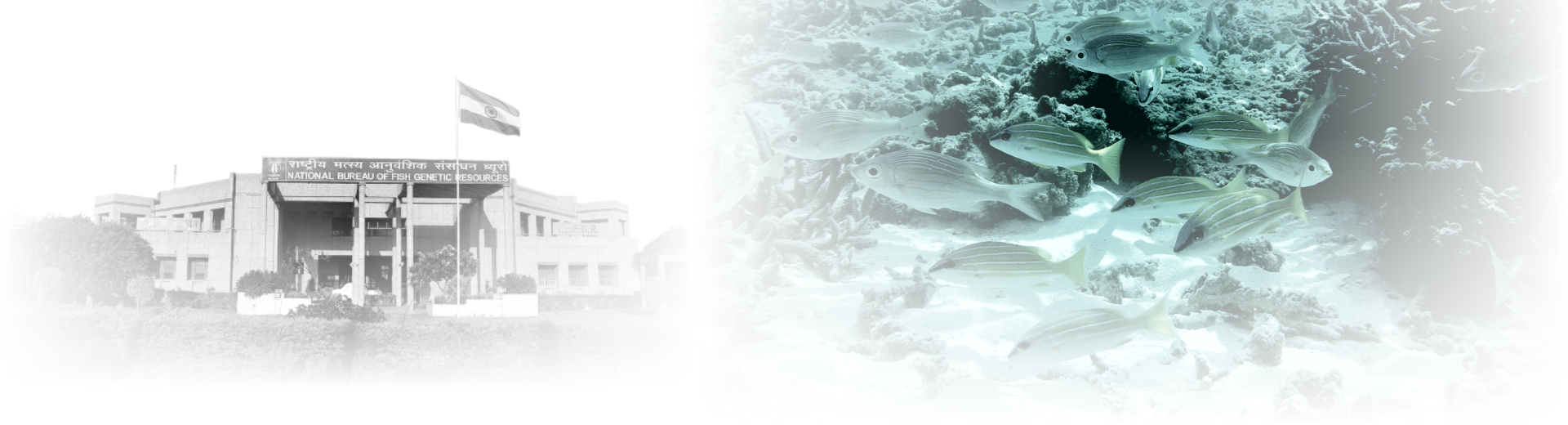

The ICAR–National Bureau of Fish Genetic Resources (ICAR-NBFGR), Lucknow, was established in December 1983 under the aegis of the Indian Council of Agricultural Research (ICAR) to undertake research on the exploration, characterization, conservation and sustainable utilization of India’s rich fish genetic resources. The Bureau began its journey from a rented premises in Allahabad (Prayagraj) and has since evolved into India’s premier institution dedicated to fish genetic resource management.CAR-National Bureau of Fish Genetic Resources (ICAR-NBFGR) was established in December 1983 in a rented premises at Allahabad under the aegis of Indian Council of Agricultural Research to undertake research related to the conservation of fish germplasm resources of the country. The Bureau’s permanent infrastructure was developed at Canal Ring Road, Telibagh, Lucknow, U.P in 1999 comprising an administrative block, laboratories, farm and residential complex covering an area of 52 acres. The Institute's vision is assessment and conservation of fish genetic resources for intellectual property protection, sustainable utilization and posterity.
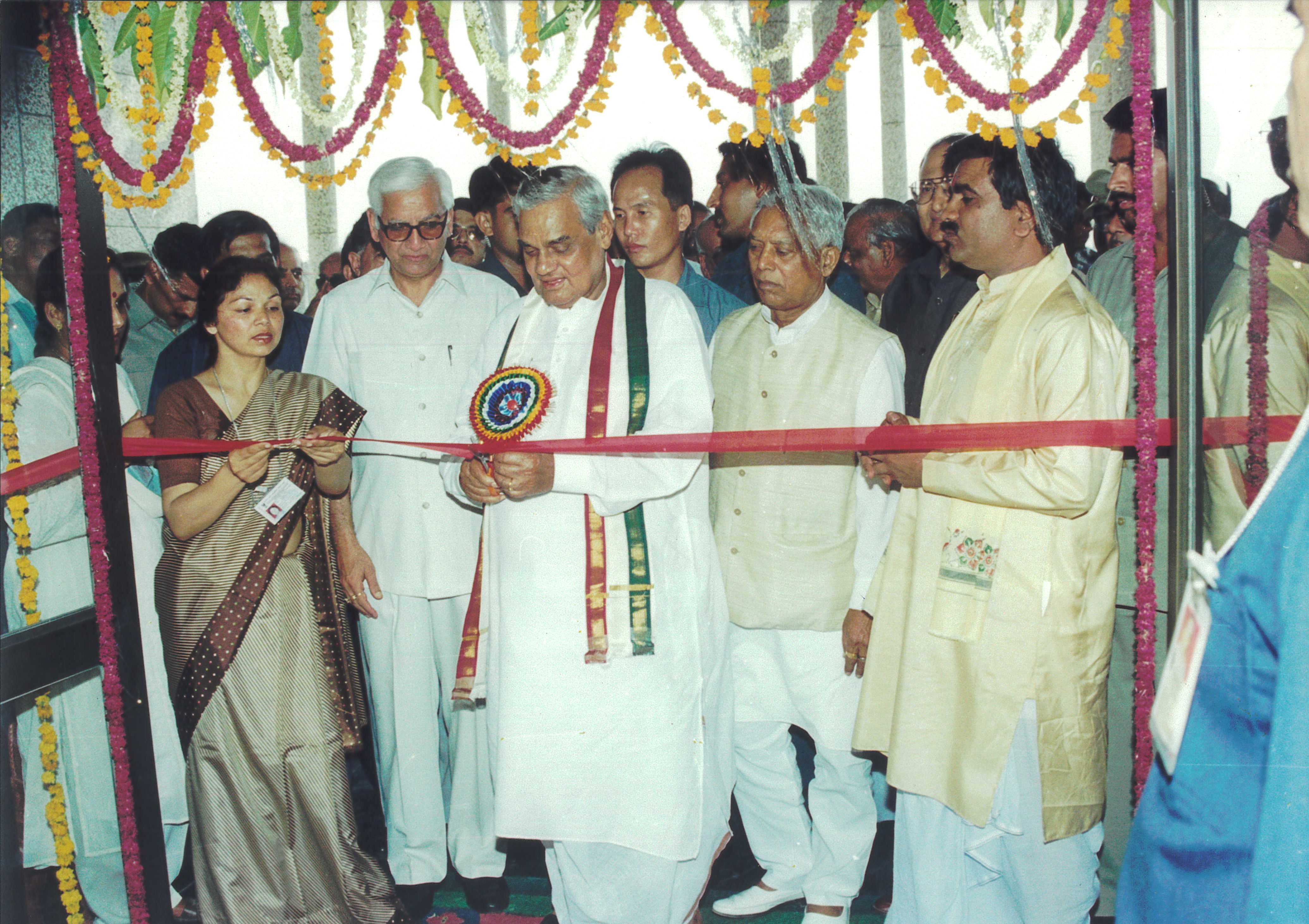
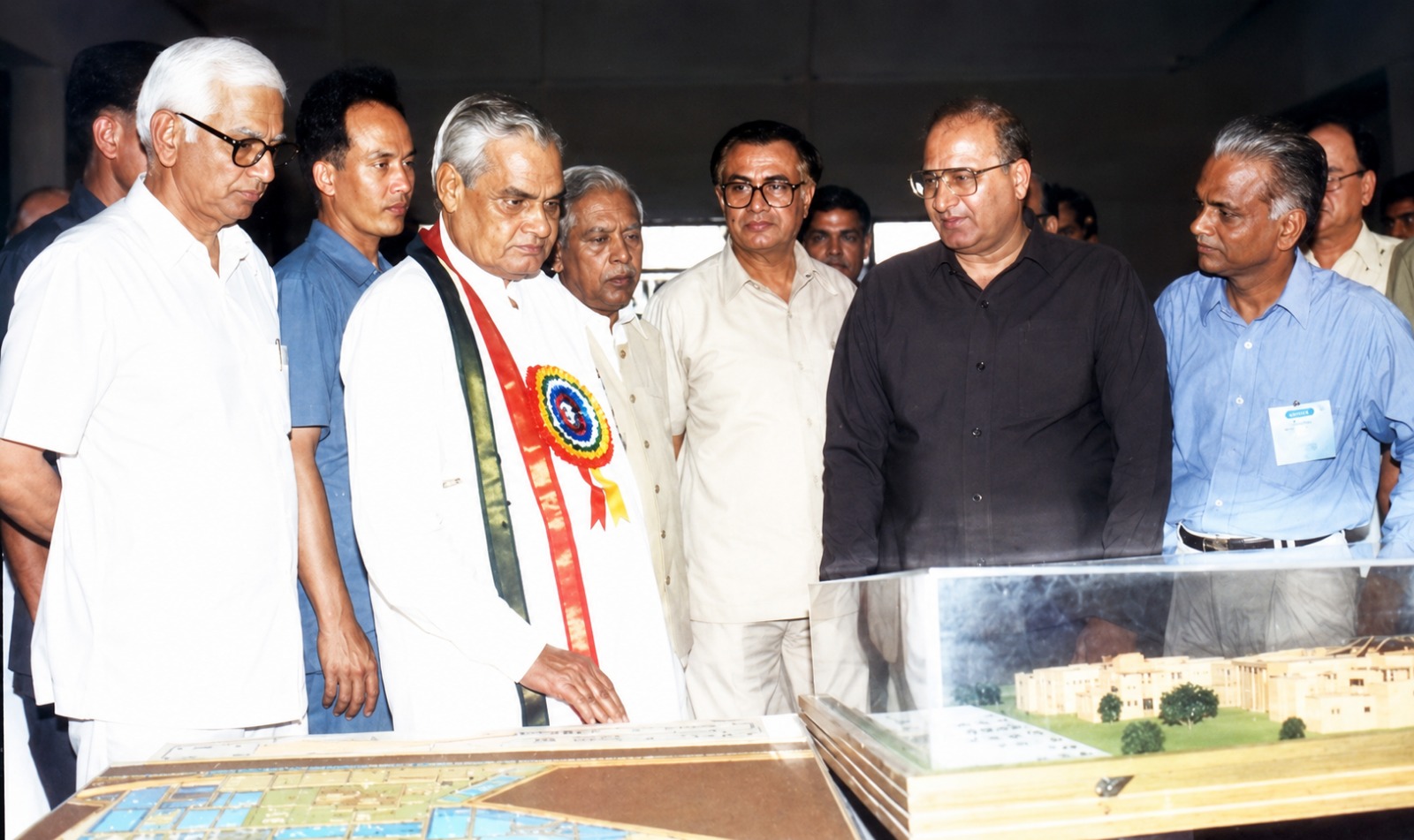
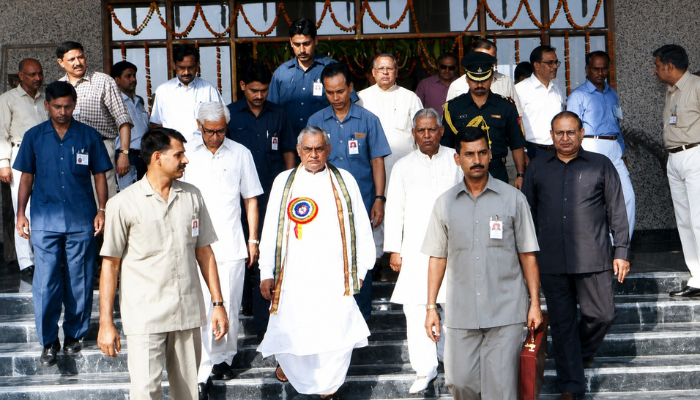
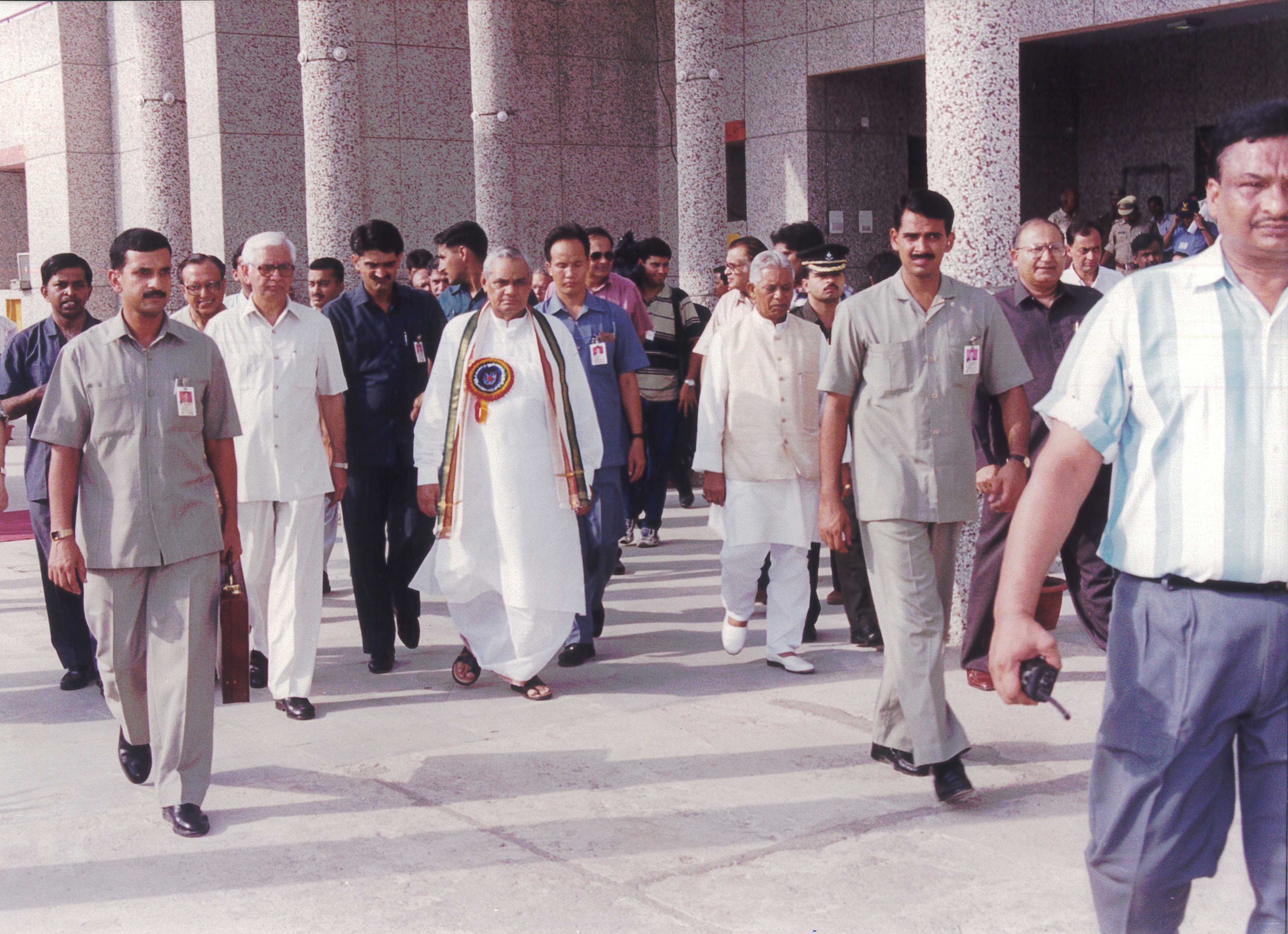
In 1994, the Bureau was relocated from Allahabad to Lucknow, marking a significant step in its expansion. Subsequently, in 1999, ICAR-NBFGR moved to its permanent campus at Canal Ring Road, Telibagh, Lucknow, where a state-of-the-art research complex was developed over 52 acres. The campus was inaugurated by the then Hon’ble Prime Minister of India, Shri Atal Bihari Vajpayee, under the visionary leadership of the then Director General, ICAR, Dr. Rajendra Singh Paroda. Since then, the campus has served as the National hub for research, conservation, and sustainable management of India's fish genetic resources, equipped with modern laboratories, experimental farms, germplasm conservation facilities, administrative buildings, and residential complexes.
Over the years, ICAR-NBFGR has developed world-class expertise in fish biodiversity assessment, molecular taxonomy, population genetics, genomics, cryopreservation, aquatic pathogen diagnostics, germplasm repositories and habitat inventory. The institute has played a pivotal role in documenting India’s fish diversity, conserving threatened and endemic species, supporting fisheries management and contributing to national policies on aquatic biodiversity conservation.
The Bureau has consistently maintained high standards of quality management and institutional excellence. It became an ISO 9001:2008 certified organization in 2011, reflecting its commitment to quality research and management practices. In recognition of its outstanding scientific contributions and institutional performance, the ICAR-NBFGR family received the prestigious Sardar Patel Outstanding ICAR Institution Award for the year 2011, one of the highest institutional honours conferred by the Indian Council of Agricultural Research.
A landmark achievement of the institute was the establishment of the Ganga Aquarium in 2010, one of the largest public freshwater aquariums in India. The aquarium serves as a major centre for public awareness, education and conservation outreach by showcasing the rich fish diversity of the Ganga River system and other aquatic ecosystems. It has also received ISO 14001:2004 and ISO 9001:2008 certifications for environmental management and quality management systems, respectively.
Strengthening its national outreach, ICAR-NBFGR established its Regional Centre at Kochi, Kerala, in 1996 to address research needs related to marine and peninsular fish genetic resources. The Kochi centre was subsequently upgraded in 2014 into the Peninsular and Marine Fish Genetic Resources Centre (currently known as Centre for Peninsular and Aquatic Genetic Resources), significantly expanding research activities on marine biodiversity and conservation. The Institute further enhanced its national conservation infrastructure by establishing the National Repository for Fish Cell Lines (NRFC) in 2010, providing unique facilities for long-term conservation of fish genetic material. In 2023, another significant milestone was achieved with the establishment of the National Fish Museum and Repository, creating a national platform for preserving, documenting and exhibiting India’s rich ichthyofaunal diversity.
Beyond research, ICAR-NBFGR plays a vital role in human resource development by organizing specialized training programmes, workshops and capacity-building initiatives for researchers, fisheries professionals, state fisheries department officials, students and fish farmers. Through these programmes, the Institute promotes the adoption of advanced technologies, conservation strategies and sustainable fisheries practices across the country.
Today, ICAR-NBFGR stands as the National leader in fish genetic resource research, conservation and policy support. With its strong scientific foundation, modern infrastructure and commitment to innovation, the Institute continues to contribute significantly towards safeguarding India’s aquatic biodiversity and ensuring sustainable utilization of fish genetic resources for future generations.
| Year | Milestone |
|---|---|
| 1983 | ICAR-NBFGR established at Allahabad (Prayagraj). |
| 1994 | Bureau shifted to Lucknow. |
| 1996 | Regional Centre established at Kochi, Kerala. |
| 1999 | Shifted to the present permanent campus at Telibagh, Lucknow. |
| 2007 | Aquaculture Research and Training Unit (ARTU) established at Chinhat, Lucknow. |
| 2010 | Ganga Aquarium established. |
| 2010 | National Repository for Fish Cell Lines (NRFC) established. |
| 2011 | Accredited as an ISO 9001:2008 certified organization. |
| 2011 | Received the prestigious Sardar Patel Outstanding ICAR Institution Award. |
| 2014 | Kochi Regional Centre upgraded as the Peninsular and Marine Fish Genetic Resources Centre (currently known as PAGR Centre). |
| 2023 | National Fish Museum and Repository established. |

'%3E%3Cpath d='M16 7C15.3078 7 14.6311 6.79473 14.0555 6.41015C13.4799 6.02556 13.0313 5.47894 12.7664 4.83939C12.5015 4.19985 12.4322 3.49612 12.5673 2.81719C12.7023 2.13825 13.0356 1.51461 13.5251 1.02513C14.0146 0.535644 14.6383 0.202301 15.3172 0.0672531C15.9961 -0.0677952 16.6999 0.00151652 17.3394 0.266423C17.9789 0.53133 18.5256 0.979934 18.9101 1.55551C19.2947 2.13108 19.5 2.80777 19.5 3.5C19.499 4.42796 19.1299 5.31762 18.4738 5.97378C17.8176 6.62994 16.928 6.99901 16 7Z' fill='white'/%3E%3Cpath d='M27 7.05L26.9719 7.0575L26.9456 7.06563C26.8831 7.08313 26.8206 7.10188 26.7581 7.12125C25.595 7.4625 19.95 9.05375 15.9731 9.05375C12.2775 9.05375 7.14313 7.67875 5.50063 7.21188C5.33716 7.14867 5.17022 7.09483 5.00063 7.05063C3.81313 6.73813 3.00063 7.94438 3.00063 9.04688C3.00063 10.1388 3.98188 10.6588 4.9725 11.0319V11.0494L10.9238 12.9081C11.5319 13.1413 11.6944 13.3794 11.7738 13.5856C12.0319 14.2475 11.8256 15.5581 11.7525 16.0156L11.39 18.8281L9.37813 29.84C9.37188 29.87 9.36625 29.9006 9.36125 29.9319L9.34688 30.0112C9.20188 31.0206 9.94313 32 11.3469 32C12.5719 32 13.1125 31.1544 13.3469 30.0037C13.5813 28.8531 15.0969 20.1556 15.9719 20.1556C16.8469 20.1556 18.6494 30.0037 18.6494 30.0037C18.8838 31.1544 19.4244 32 20.6494 32C22.0569 32 22.7981 31.0162 22.6494 30.0037C22.6363 29.9175 22.6206 29.8325 22.6019 29.75L20.5625 18.8294L20.2006 16.0169C19.9387 14.3788 20.1494 13.8375 20.2206 13.7106C20.2225 13.7076 20.2242 13.7045 20.2256 13.7013C20.2931 13.5763 20.6006 13.2963 21.3181 13.0269L26.8981 11.0763C26.9324 11.0671 26.9662 11.0563 26.9994 11.0438C27.9994 10.6688 28.9994 10.15 28.9994 9.04813C28.9994 7.94625 28.1875 6.73813 27 7.05Z' fill='white'/%3E%3C/g%3E%3Cdefs%3E%3CclipPath id='clip0_1_1506'%3E%3Crect width='32' height='32' fill='white'/%3E%3C/clipPath%3E%3C/defs%3E%3C/svg%3E%0A) Accessibility Options
Accessibility Options